


06
oct
2022
- Waste
- Circular economy
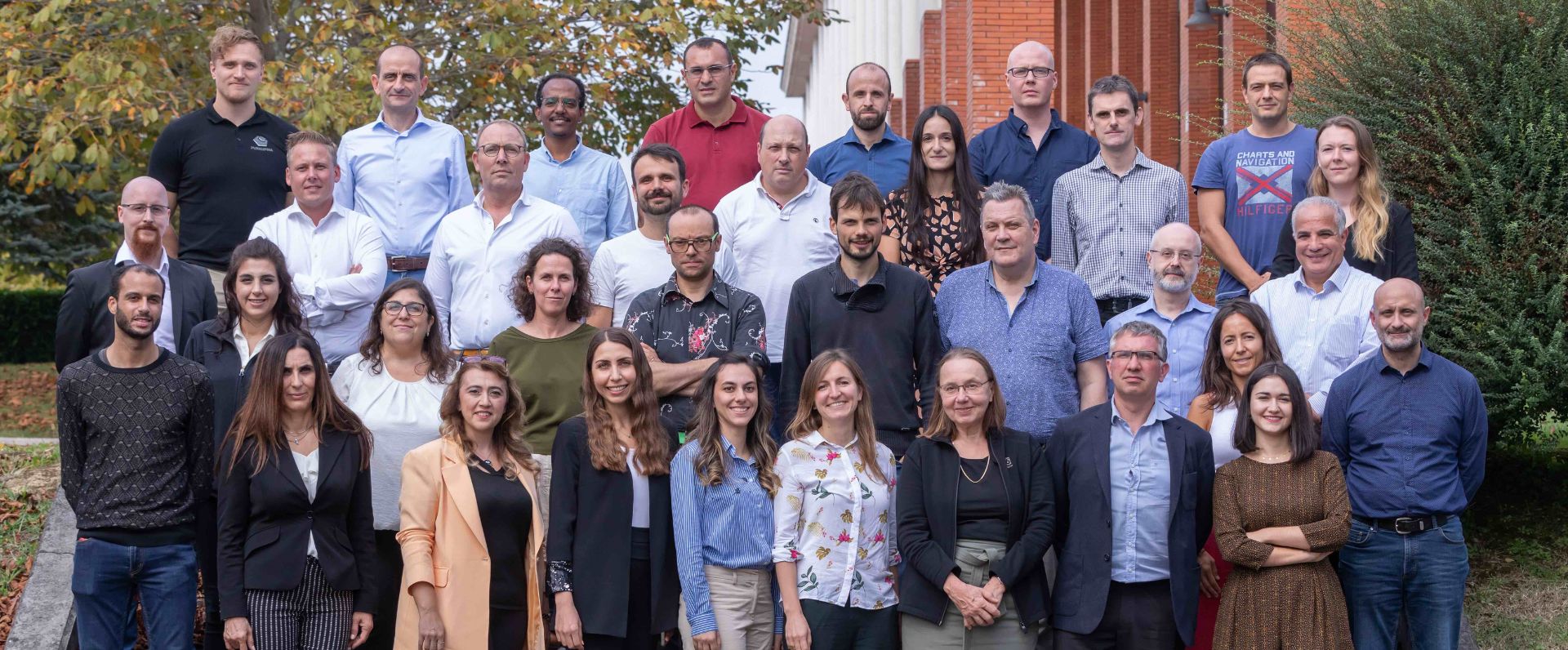
This week, TECNALIA and GAIKER Technology Centres are hosting the General Meeting of the ICEBERG EU project in which six Basque organisations are involved
The aim is to offer innovative circular economy-based solutions for producing high-value materials
The European ICEBERG project - acronym for Innovative Circular Economy Based solutions demonstrating the Efficient recovery of valuable material Resources from the Generation of representative End-of-Life building materials - is funded by the European Union as part of the Horizon 2020 Research and Innovation Framework Programme (contract No. 869336). It aims to address the circularity of the most commonly used materials in construction, ranging from the recovery and recycling of construction and demolition waste (CDW), to the development of more sustainable products..jpg) The objective is to design, develop and validate innovative recycling systems and technologies, to make it possible to produce high-value recovered materials, that have a low level of impurities (less than 8%) and are safe. Validation will be carried out on an industrial scale by means of six case studies in different locations in Europe, covering the circularity of concrete, ceramics, wood, plaster, insulating foams and super-insulating materials. It also seeks to improve the reliability and acceptability of recycled materials from construction waste.
The objective is to design, develop and validate innovative recycling systems and technologies, to make it possible to produce high-value recovered materials, that have a low level of impurities (less than 8%) and are safe. Validation will be carried out on an industrial scale by means of six case studies in different locations in Europe, covering the circularity of concrete, ceramics, wood, plaster, insulating foams and super-insulating materials. It also seeks to improve the reliability and acceptability of recycled materials from construction waste. MOBILE SEPARATION UNIT
GAIKER Technology Centre will help develop the mobile unit for the automatic separation and classification of CDW. In this case, the Basque companies, Lezama Demoliciones, Serikat and Viuda de Sainz participate by providing their expertise and collaborating in the development of the reverse logistics support tools and validating all the solutions in a local case study (of the 6 case studies included in the project, one will be run from the Basque Country).Representatives of the 35 organisations involved visited Gaiker's facilities yesterday to see to see the automatic material recognition equipment using hyperspectral sensors and artificial intelligence algorithms, which is being brought to industrial scale by LENZ Instruments and will be validated in several of the case studies over the coming months, whereby one of them is led by Viuda de Sainz.
ICEBERG
The project will last for four years and has a budget of 15,667,498 euros, of which the European Union is providing 12,997,935 euros. In the first half of the project, tools and technologies are being developed to improve the traceability, identification, separation, recycling and reuse of materials from C&DW. The second part of the project will be dedicated to demonstrating these solutions in six case studies, by analysing their economic and environmental impact and their impact on workers' health.Further information: www.iceberg-project.eu
Source: Ihobe


