



- Climate change
- Local public action
The Basque Country is preparing for the heat with nearly 500 climate shelters throughout the region
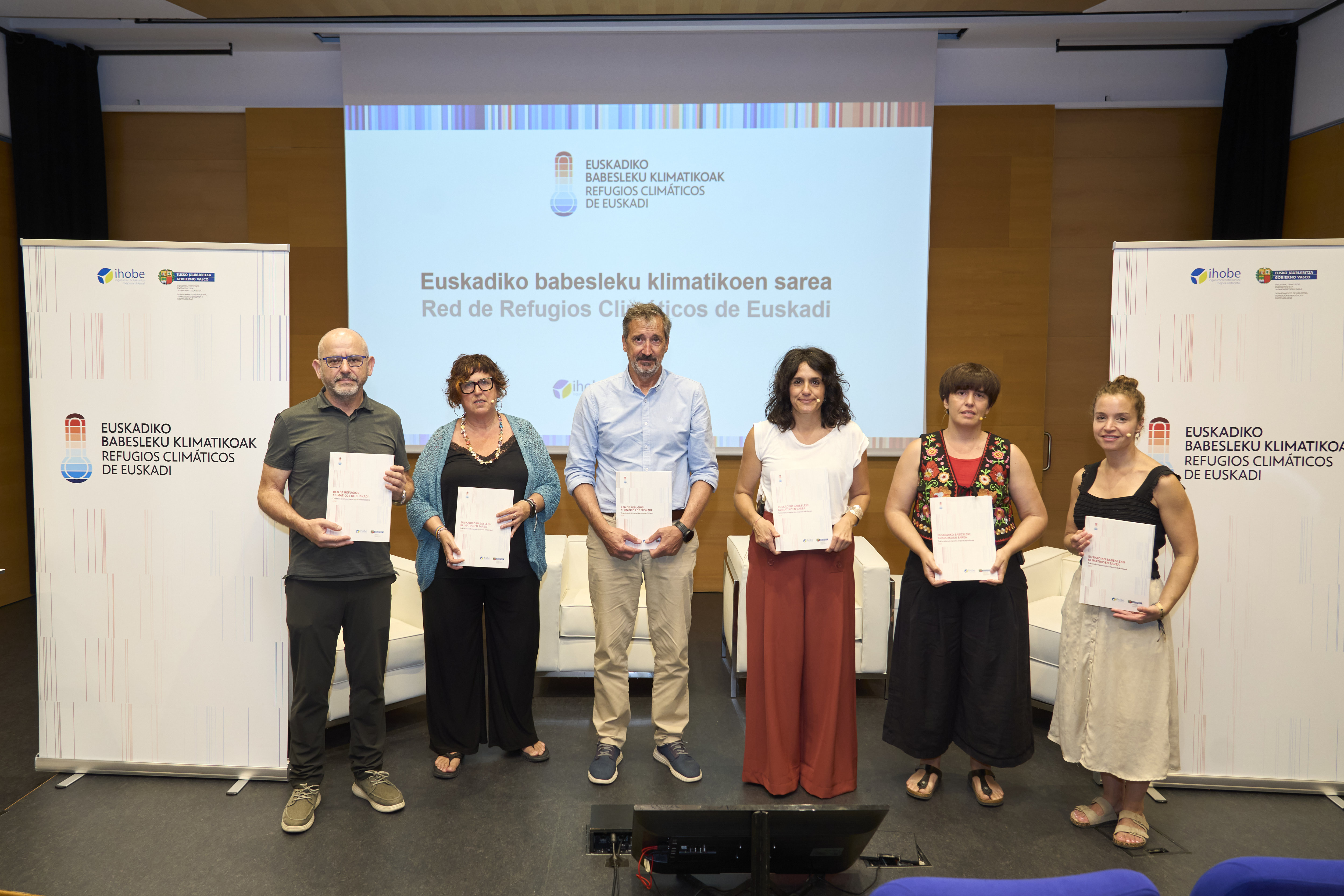
Faced with rising temperatures, the Basque Country is taking specific measures to adapt to climate change in order to protect its citizens from one of the most visible and growing impacts of global warming: heatwaves. 11 Basque municipalities already have a network of climate shelters, making up a total of 488 spaces and serving more than one million people, nearly half the population of the Basque Country. They are located in the municipalities of Amurrio and Vitoria-Gasteiz in Alava; Barakaldo, Bilbao and Gernika in Bizkaia; and Bergara, Donostia-San Sebastián, Hernani, Irún, Pasaia and Tolosa in Gipuzkoa. This is a growing network that uses existing urban facilities and spaces to address an increasingly frequent climate-related risk.
More than a million people can access municipal public spaces where they can seek shelter from heatwaves
In this context, the creation of a network of climate shelters is proving to be a highly effective adaptation measure in the region, as it provides the public with familiar, safe and comfortable spaces during heatwaves.
A local response to a growing problem
Rising temperatures and more frequent episodes of extreme heat are a reality in the Basque Country. Climate projections indicate that the number of days with temperatures above 35°C will increase across the country over the coming decades, posing a growing health risk, especially for the most vulnerable (the elderly, children, people with chronic illnesses or those in situations of energy poverty). In Bizkaia and Gipuzkoa, the number of days a year will increase from 3 or 4 days to about 16–17 days by the end of the century; and in Alava, the increase will be from approximately 4 days to more than 20 days a year.
The Basque Country's network of climate shelters has identified 488 shelters in 11 municipalities
According to the first report on the “State of the Climate in the Basque Country” presented by the Basque Government last year, temperatures in the Basque Country have risen by 0.3 °C per decade since 1970, and there has been an increase in the frequency and duration of heatwaves. The number of heatwave days has doubled from 4 days in the 1970-2000 period to almost 9 in the 2014-2023 period.
Climate shelters are places where anyone can go when it’s very hot to seek shelter and recover from the negative health effects of the heat, such as libraries, air-conditioned community centres, parks with shade and trees or squares with green spaces and fountains. These spaces are distributed across the neighbourhoods and are intended to protect vulnerable individuals, such as the elderly, children and people with health issues.
The goal of this network is not to create new spaces, but to adapt and take advantage of existing ones during periods of extreme heat in order to protect the public.
Municipalities, at the forefront of climate adaptation
In order to support local authorities in the design and creation of these spaces to seek protection from the heat, the Basque Government, through its public agency, Ihobe, has published the guide “Network of Climate Shelters in the Basque Country 2026. Technical Criteria for Local Authorities”, based on initiatives already implemented in Basque municipalities. In addition to this guide, a common “Basque Country Climate Shelters” logo has been designed to identify these shelters, so that anyone can easily recognise them in any municipality in the Basque Country.
The public agency Ihobe has published a guide to help local councils identify, create and raise awareness of their networks of climate shelters
Both the guide and the logo will help identify spaces that serve as climate shelters during heatwaves, by creating informative maps and designing urban routes that enable residents to get around while avoiding areas with the highest heat exposure.
The creation of a network of climate shelters highlights the key role of local councils in addressing climate change, as it is these public authorities that identify spaces that can serve as shelters from the heat, incorporate climate criteria into urban planning, increase the resilience of neighbourhoods and foster greater climate equity.
More inhabitable cities that are ready for the future
Rising temperatures and more frequent episodes of extreme heat pose a growing risk to public health. In the Basque Country, this impact is already being reflected in mortality rates and underscores the need to consolidate prevention and adaptation measures at the local level, such as climate shelters. This initiative helps reduce the risks associated with extreme heat, one of the weather phenomena that causes the highest number of deaths in Europe during the summer, while improving the inhabitability of towns and cities.
Climate shelters are an effective and cost-efficient strategy to adapt to climate change, helping people protect themselves during episodes of extreme heat by fostering the use of existing, accessible and air-conditioned spaces that are turned into climate shelters during periods of high temperatures
Through simple, effective and low-cost measures, the Basque Government and the Basque municipalities are creating an adaptation model that is practical, accessible and people-oriented.
Source: Ihobe


