


- Circular economy
The Basque Country launches the Basque Zirkular Metals project to lead the new circular steel industry in Europe
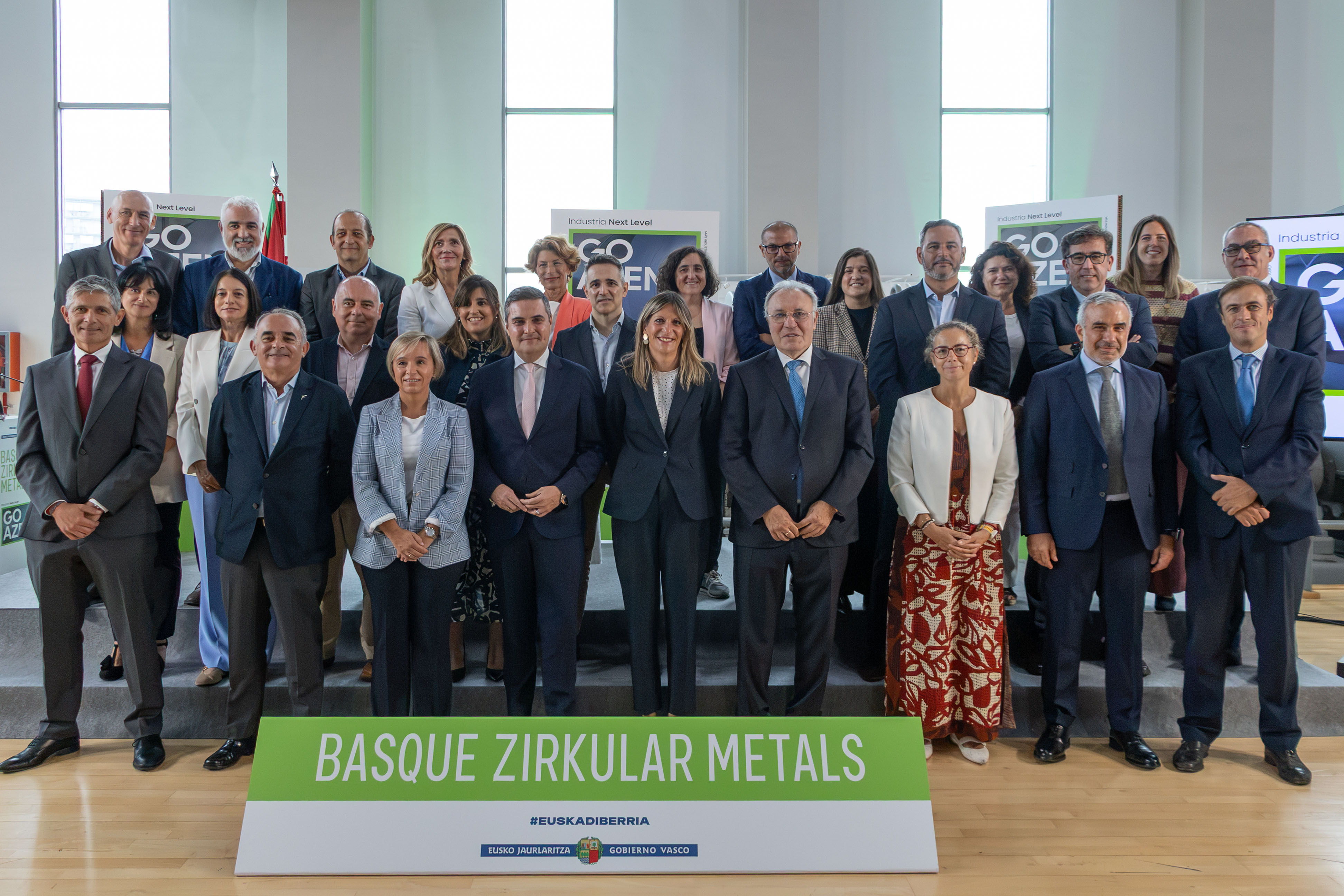
The Basque Government’s Minister for Industry, Energy Transition and Sustainability, Mikel Jauregi, today presented Basque Zirkular Metals, one of the transformative, publicly led projects under the Basque Country Industry Plan 2030, which aims to position the Basque Country as one of Europe’s leading regions in the transition to a more circular steel and metals sector.
Basque Zirkular Metals is one of the transformative publicly led projects under the Basque Country Industry Plan 2030 and a strategic initiative aimed at strengthening the competitiveness of the Basque metal industry
The project expects to mobilise around €25 million and will bring together 11 leading industrial companies, 5 industrial clusters and actors from the Basque Science, Technology and Innovation Network to develop solutions to strengthen competitiveness, strategic autonomy and decarbonisation across six industrial sectors in the Basque economy: the steel, automotive, sustainable mobility, wind energy, advanced manufacturing and construction sectors. The project will involve ArcelorMittal Sestao, Sidenor, Tubacex Group, Gescrap, CAF, Gestamp, Gamesa Gearbox, Haizea Wind Group, Viuda de Sainz, Etxetar and FMD Carbide, together with BRTA, EHU and TKNIKA; and the Siderex, AFM, Buid:INN, Acicae and Aclima clusters.
Jauregi stressed the point that the Basque Zirkular Metals project is the Basque Country’s response to one of the main challenges facing European industry: ensuring a competitive, innovative, low-carbon steel value chain.
Basque Zirkular Metals is a strategic initiative by the Basque Country to position itself as a leader in the transition to a circular metal sector in Europe. The aim is to strengthen industrial competitiveness, ensure access to strategic materials and create new opportunities for innovation, investment and quality employment. “Europe’s industrial future will increasingly depend on its ability to make better use of available materials. With this transformative project, we aim to position the Basque Country among the leading European regions in the circular transformation of steel and metals. A circularity project that enhances competitiveness and drives decarbonization in our industry”, stated Minister Mikel Jauregi.
The aim of the project is to position the Basque Country as one of Europe’s leading regions in the transition to a more circular steel and metals sector. It will strengthen Basque industry’s strategic autonomy, access to key materials and capacity for innovation
Steel and metals are part of the historical core of the Basque industrial model and continue to play a key role in its economic activity. They account for 49% of gross value added in industry and provide more than 110,000 jobs in the Basque Country. Furthermore, annual metal consumption is at around 10 million tonnes and accounts for 63% of the carbon footprint of the materials used by the Basque economy.
The Basque Zirkular Metals project tackles the challenge of improving strategic self-sufficiency in metals and steel. It is based on a central premise: the need to make better use of existing materials, increase the availability of secondary raw materials and improve access to high-quality scrap. It will help to reduce Europe’s reliance on raw material supplies and create products with higher added value.
This new publicly led transformative project is the 16th to be presented out of the 25 to which the Basque Government committed under the Basque Country Industry Plan 2030. Of the 16, six were privately led, and ten are led by the public sector.
Key aspects of the project
The project will initially focus its activities on six industrial sectors that are important to the Basque Country: the steel, automotive, sustainable mobility, wind energy, advanced manufacturing and construction sectors. These sectors depend on the availability, quality and price of steel and other metals, as a result of which their future competitiveness is closely linked to the Basque Country’s ability to develop circular solutions and anticipate changes in the European market.
The initiative expects to mobilise around €25 million and will involve 11 industry leaders, 5 industrial clusters and actors from the Basque Science, Technology and Innovation Network, in order to speed up the transition towards a more circular, competitive metals sector
The Basque Zirkular Metals project is based on a process of consultation and collaboration with industry. During the first half of 2026, the Basque Government held more than 50 bilateral meetings with industries and industrial clusters. This diversity made it possible to identify priorities for the project, such as access to high-quality scrap metal, technological improvement, material traceability, eco-design, new business models and anticipating regulatory changes All of this will help to advance the “Made in Europe” model promoted by the EU.
The roll-out of the project includes demonstration projects led by leading industrial companies and will be aimed at improving the competitiveness of Basque SMEs. The project’s first major milestone will be to promote the digital traceability of steel, aluminium and other metal products that are subject to the new European Digital Product Passport requirement.
From the outset, the project will help industries find out where the materials they use come from and the journey they take before becoming new products. It will also encourage products to be designed to last longer, be easier to repair and generate fewer emissions and less waste. In addition, initiatives will be launched to reuse products and materials rather than throwing them away, giving them a new lease of life wherever possible.
The project will also encourage industries from different sectors to work together, from those that recycle materials to those that process them or use them to manufacture new products. Finally, industries and professionals will be trained to ensure that they are ready for the new European regulations.
The aim of the project is to position the Basque Country as one of Europe’s leading regions in the transition to a more circular steel and metals sector, along with Lombardy (Italy), Flanders (Belgium), Grand Est (France), North Rhine-Westphalia (Germany) and central Sweden.
Transformative Projects under the Industry Plan
The Basque Country Industry Plan 2030 set out 23 transformative projects involving led by both the public and private sectors. Two new private-led transformative projects have been added to these: “Zero Emissions Marine Boat” and “Smart Hydrogels for Nanomedicine”.
The aim of the transformative project is to move towards higher value-added, low-carbon metal products, reduce reliance on imported raw materials, and anticipate new European requirements regarding circularity and decarbonisation
The Industry Plan is a dynamic framework on which transformative projects are based, meaning that new projects are expected to continue to be added as industrial needs evolve.
In total, of the 25 current transformative projects, 16 have already been launched: 10 of them are led by the public sector and 6 by the private sector.
The projects led by the public sector are: ESG Euskadi (BasquESG); Euskadi: “Climate change adaptation living lab”; “Planning of Basque electricity grids (increase in capacity of more than 40%)”; “Euskadi SpaceLab (ESA BIC)”; “Renewable energy development”; “Improvement in administrative processes (regulatory highway)”; “Strategic reserve of industrial land and infrastructure”; “Scale-up fund”; Euskorpus; and the project presented today, “Basque Zirkular Metals”.
The six projects led by the private sector are: “New aircraft engine architectures for sustainable and competitive aviation in the Basque Country”; “ROBOOST”; “Smart hydrogels for personalised nanomedicine”; “Renewable fuels hub”; “Grid4Industry”; and “Zero emissions marine boat”.
These six transformative projects represent an initial investment of over €679 million, of which €368 million is earmarked for R&D and technological development. The six projects will create more than 3,800 high quality jobs over the coming years. They will also bring a further 159 companies on board – mostly SMEs – from the Basque industrial sector, in collaboration with the region’s technology centres.
Source: Ihobe


